
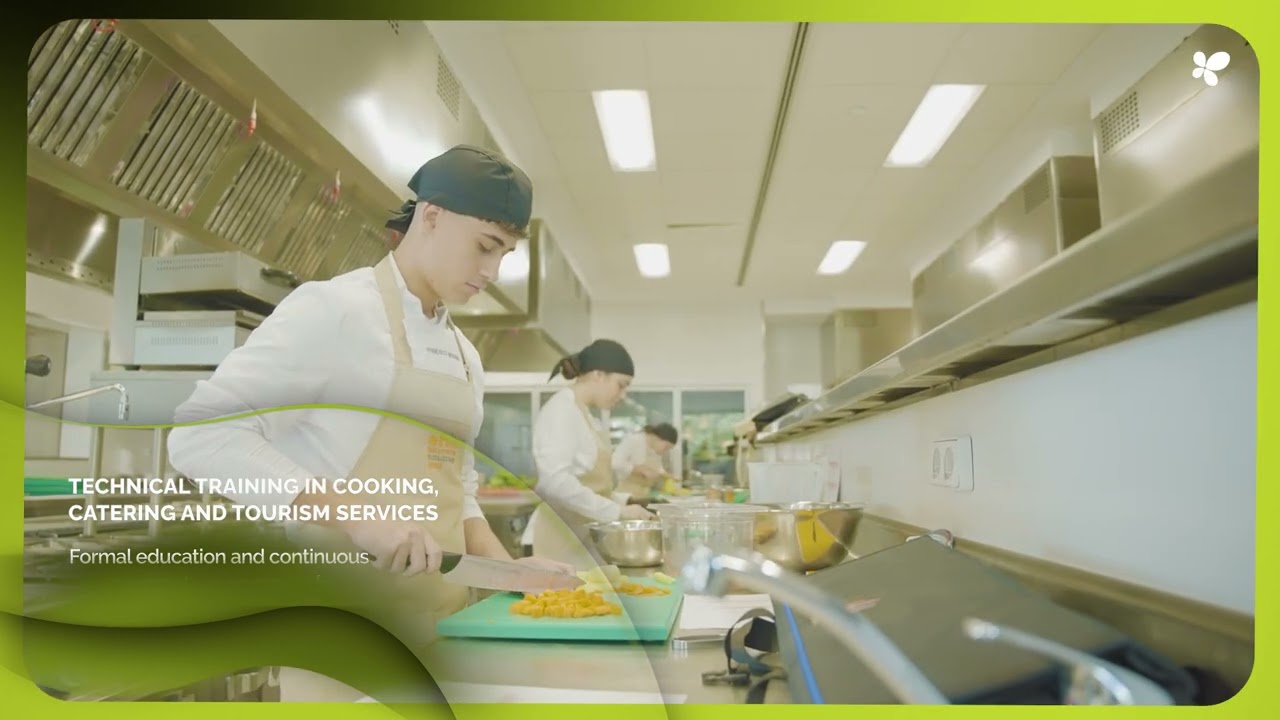

Pepa Costa is the head of the Balearic School of Hospitality in Ibiza (EHIB Ibiza), a brand-new training centre designed to offer excellence and specialisation for chefs, waiters and sommeliers. With a strong connection to the local tourism industry and courses adapted to the low season, the project seeks to reinforce the island's culinary identity through training.


How did you come to be the school’s director?
I was at another school when the Regional Ministry of Tourism offered me this project. The person who was originally supposed to direct it left for personal reasons, and I was asked to take on the challenge.
What needs justified the creation of this school?
It was a long-standing demand of the industry. In Ibiza there are already vocational training schools for hospitality, but there was a need for more specialised, more advanced courses. EHIB responds to this, as a school created based on the needs of the industry itself.
How important is it that it has been driven by the industry itself?
I think that makes it more legitimate. The industry was canvassed, concerns were gathered and insights on the island's reality were taken. This gives meaning to the project.
What training courses does the school offer today?
The last academic year was the first one with training courses. We have a master's degree in Haute Cuisine and Culinary Management with the collaboration of the School of the Barcelona Pastry Chefs’ Guild and big names such as Óscar Molina, Paco Roncero and Rafa Zafra. There are also advanced patisserie, catering and sommelier courses, as well as continuing education courses in baking, cocktail making and Ibizan cuisine. This year, we’re adding a brand-new qualification in Spanish wines—the world’s first in Spanish. We’re also collaborating with the University of the Balearic Islands (UIB) to create a specialist course in MICE.
What kind of profiles is this training aimed at?
There are options for everyone. The master’s degree is aimed more at people with experience; the specialist courses start from scratch. The courses are designed to take place in the low season, from October to April, and can be taken as a complete course or in modules to suit each student’s available finances or time. Furthermore, they are subsidised through the National Foundation for Employment Training (FUNDAE).
How has the first year been?
Great Regarding the master's degree, everyone who finished it and wanted to work are doing so. As for sommeliers, most of them have managed to enter the industry and others, who were already in the industry, have managed to update their skills to fill a more specific role. For the two-year courses, we’re still in the second year, but the response has been very good.
How is the relationship with companies in the industry?
We work with an advisory board to identify all needs. We’ve yet to launch the accommodation department, which we hope to begin this year. Moreover, together with Vatel, we’re doing a study to find out what type of training each company needs and in what format. We want to adapt to their circumstances.
What role does local produce play in the training you offer?
It’s fundamental. Together with the Island Council and the Ibiza Town Council, we organise Ibizan cooking workshops around the holidays and promote zero-mile products. In fact, we’re working on creating a specialist qualification in Ibizan Cuisine.
And how does this reinforce Ibiza’s branding as a food & drink destination?
Better training leads to better service and higher quality food. This strengthens Ibiza not only as a tourist destination, but also as a hub for education. We’re starting to work on tailor-made training to adapt specific skill profiles to real business needs.
How do you imagine the school in a few years' time?
I’d like it to be a school of national and international renown, which is highly flexible in terms of offering curricula adapted to both companies’ and students’ availability. We want to be at the forefront, with practical training courses aimed at ensuring job security. Our goal is for students to leave feeling more confident and prepared: that’s the most valuable thing for us.
News and Articles on Sustainable Tourism


